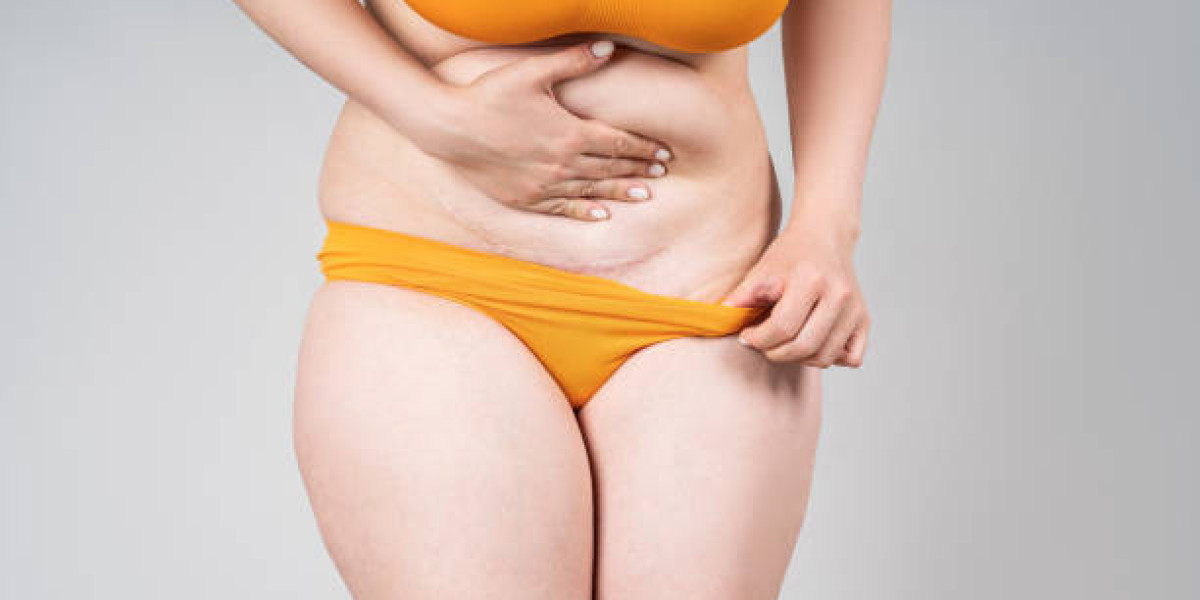

Bariatric surgery and significant weight loss are monumental achievements that improve health and longevity, yet they often leave behind a secondary challenge: extensive, redundant skin. For many in the UAE who have lost 40kg or more, the remaining abdominal "apron" can be heavy, uncomfortable, and a constant reminder of their previous weight. A Tummy Tuck in Dubai for post-bariatric patients is often considered the final, reconstructive step in their transformation. This procedure goes beyond standard aesthetics; it is designed to remove the physical and emotional burden of excess tissue, allowing the patient to finally see and feel the results of their hard work.
At Tajmeels Clinic, we observe that for post-weight loss patients, this procedure provides a profound sense of "closure" and physical freedom.
The Unique Anatomical Needs of Massive Weight Loss
The skin of a post-bariatric patient behaves differently than that of a post-pregnancy patient. Years of being stretched to its limit often permanently damage the skin’s elastic fibers.
Addressing 360-Degree Skin Laxity
In many cases, the loose skin is not confined to the front of the abdomen but extends to the hips and lower back. While a standard Tummy Tuck in Dubai focuses on the anterior (front), we observe that post-bariatric patients often benefit from an "Extended" or "Circumferential" approach to ensure a smooth transition around the entire waistline. This prevents "dog ears" or skin bunching at the sides of the hips.
Managing the "Mons" Area
Massive weight loss often leads to sagging in the pubic (mons) area. A specialized Tummy Tuck in Dubai includes a "Monsplasty" or pubic lift, which repositions and thins this area to match the new, flatter abdominal profile. We observe that this detail is crucial for ensuring the patient feels comfortable and confident in fitted clothing and swimwear.
Preparing for Surgery After Major Weight Loss
Safety is the highest priority for patients who have undergone major metabolic changes. We prioritize a specialized pre-operative protocol to ensure a smooth recovery.
Nutritional Stability: Bariatric surgery can sometimes lead to malabsorption of certain vitamins. We observe that optimizing levels of Vitamin C, Iron, and Protein is essential for wound healing.
The Weight Plateau: Patients must be at a stable weight for at least six to twelve months. We observe that undergoing a Tummy Tuck in Dubai while still actively losing weight can lead to further skin sagging, requiring a second procedure.
Skin Hygiene: Excess skin folds can often lead to rashes or irritation. We ensure any skin-fold issues are treated prior to surgery to minimize the risk of infection during the healing phase.
Recovery Expectations: The Post-Bariatric Experience
Because the volume of tissue removed is often greater in post-bariatric cases, the recovery requires a dedicated and patient-focused approach.
Managing Fluid and Inflammation
Due to the larger surface area of the surgery, the body produces more lymphatic fluid during healing. We observe that post-bariatric patients may need to keep their surgical drains in for a few extra days compared to standard patients. Wearing a medical-grade compression garment is essential to help the skin adhere to its new, narrower foundation.
Realistic Sensation: "The Physical Relief"
Based on post-procedure follow-ups, bariatric patients report a unique sensation of "lightness." The removal of several kilograms of skin often relieves chronic lower back pain and skin-fold discomfort almost immediately. We observe that while the initial "tightness" of the muscle repair is significant, the relief of losing the "apron" of skin is the most celebrated part of the recovery.
"After losing 70kg, I felt like I was still hiding under a suit of skin. The surgery at the clinic finally let me see the body I worked so hard for. I feel ten years younger," shares Ali, a 45-year-old resident.
"I was nervous about the recovery, but the support from the team was amazing. The way they reshaped my hips and stomach has completely changed how I move and exercise," says Maria, a 38-year-old expat.
Why Choose Tajmeels Clinic for Post-Weight Loss Contouring?
At Tajmeels Clinic, we specialize in the complex reconstructive needs of post-bariatric patients. We understand that a Tummy Tuck in Dubai is the final chapter of your weight loss story, and we treat it with the clinical expertise it deserves. Our specialists are highly experienced in "Large-Volume" tissue handling and advanced body-contouring techniques, ensuring your results are smooth, safe, and durable. We provide a professional, medical-grade environment where your nutritional and physical health are monitored by an expert team. By choosing us, you are opting for a sophisticated, expert-led path to finalizing your transformation and reclaiming your life.
FAQs
How much skin is typically removed for a post-bariatric patient?
The amount varies, but we observe that it is common to remove between 3kg and 8kg of skin and underlying tissue. This significantly changes the patient's physical silhouette and clothing size.
Will a Tummy Tuck in Dubai remove all my stretch marks?
Any stretch marks located on the skin that is physically excised (usually the area below the belly button) will be gone. We observe that marks above the navel are often pulled lower and become less noticeable, but they are not entirely removed.
Can this procedure be combined with a thigh lift?
Yes. Many post-bariatric patients choose to combine their Tummy Tuck in Dubai with a medial or lateral thigh lift to achieve a more comprehensive lower-body transformation in a single surgical session.
When is the best time to have surgery after a Gastric Sleeve or Bypass?
We observe that the "sweet spot" is usually 18 to 24 months after the bariatric procedure, once your weight has stabilized and your nutritional levels have been optimized for at least six months.
Will I have a long scar?
Yes, the incision for post-bariatric patients is typically longer to ensure all redundant skin is removed. However, we observe that the scar is placed as low as possible to remain hidden within most underwear and swimwear.
Is the recovery more painful for bariatric patients?
The recovery is more about "tightness" and managing mobility than sharp pain. We observe that because bariatric patients are often highly motivated to complete their journey, they tend to handle the recovery process with great resilience and discipline.