
We have all made choices that seemed brilliant at the time but aged terribly. That barbed wire tattoo around your arm or the Chinese character you were told meant "strength" (but actually means "soup") is a classic example. Years ago, erasing such a mistake was an agonizing process. The lasers relied on ferocious heat. It felt like tiny needles of fire stabbing your skin. You needed what felt like a lifetime of sessions, spent a fortune, and often ended up with scars that looked worse than the original tattoo.
That nightmare is over. Pico laser treatment has become the new benchmark for removing unwanted ink. It actually delivers on the promise of being faster and significantly less painful. If you are ready to stop hiding an old tattoo under layers of clothing, here is a straight-talking guide to why this technology works and what you need to know before you begin.
The Old Way vs. The New Way
To understand why this is such a breakthrough, you need to see how older lasers caused so much harm. Traditional removal machines operated with nanosecond pulses—one billionth of a second. They worked by heating the ink until it exploded from thermal pressure.
That blistering heat created a lot of collateral destruction. It burned healthy skin around the tattoo, leading to painful blisters, raised scars, and excruciating pain. Your skin had to recover from a burn injury after every single visit.
Pico laser treatment takes an entirely different approach. It fires pulses in picoseconds—one trillionth of a second. This pulse is so incredibly brief that heat never has time to build up. Instead, the laser generates a photomechanical shockwave, similar to using sound to break a glass. This shockwave pulverizes the ink particles without damaging the surrounding skin.
Why It Is Faster
The speed advantage comes from how finely the ink gets broken down. Imagine your tattoo as a large chunk of concrete beneath your skin.
An older laser would crack that concrete into smaller stones. Your immune system then has to haul those stones away one by one. Your lymphatic system struggles to clear chunks of that size, so the process drags on for months or even years.
Pico laser treatment turns that concrete into fine dust. The resulting particles are so tiny that your body flushes them out with ease. Because the ink is shattered so completely, your immune system clears it much more rapidly.
This means you need significantly fewer appointments. What once required ten or twelve grueling visits with outdated equipment might now be completed in four to six. You regain clear skin in roughly half the time.
Why It Hurts Less
Most of the pain from laser removal stems from heat. When your skin burns, it hurts badly. Since Pico laser treatment relies on sound waves and mechanical pressure rather than extreme temperatures, thermal injury to your tissue is minimal.
Patients often describe the sensation as a quick, sharp flick—like a thin rubber band snapping against your arm. Let us be realistic: it is not painless. No laser procedure will ever feel like a massage. However, it is dramatically more tolerable than the searing, burning agony of older machines.
Because thermal trauma is minimized, your recovery is also faster. You will see fewer blisters and a much lower risk of permanent scarring. Your skin remains healthier and more resilient throughout the entire removal journey.
What to Expect at the Clinic
Walking into an aesthetic clinic for this procedure is simple and straightforward. First, the technician cleans the treatment area thoroughly. They apply a strong numbing cream and cover it with plastic wrap. You will wait with that cream on for about thirty to forty-five minutes.
Next, you put on protective goggles to shield your eyes from the bright flashes. The technician fires the laser. The noise is loud—comparable to snapping a thick rubber band repeatedly against your skin. The session itself passes quickly. A small tattoo may take only five minutes. A larger piece, such as a leg sleeve, could take an hour.
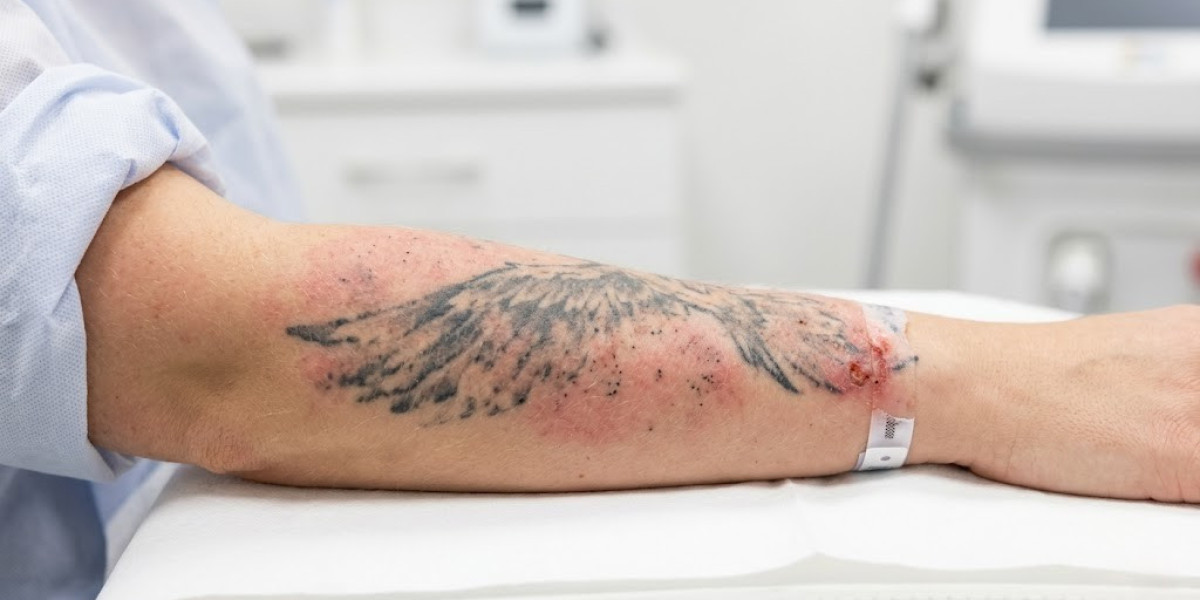
Right after the laser hits, your tattoo will turn white. This phenomenon is called frosting. It is simply gas bubbles forming beneath your skin due to the shockwave. The whiteness fades within about twenty minutes. The area will look red and swollen, similar to a moderate sunburn.
The Reality of Aftercare
You may develop some minor blistering, though this is far less common with modern technology than with older lasers. The aftercare is simple: keep the area clean. Apply the recommended healing ointment and avoid direct sunlight entirely. Do not pick at any scabs that form. Let them fall off naturally to prevent scarring.
You also need to space out your sessions properly. Your body requires six to eight weeks between visits. This gives your immune system time to clear the shattered ink particles and allows your skin to heal completely. Rushing the process is counterproductive. Your macrophages—the specialized cells that consume foreign particles—need adequate time to do their job.
Managing Your Expectations
Pico laser treatment is remarkable, but it is not a magic wand. Black and dark blue inks absorb laser energy most efficiently, so they fade the quickest. Bright colors like green, yellow, and turquoise are stubborn. These pigments may require specific laser wavelengths and additional sessions to disappear entirely.
Professional tattoos with deep, densely packed ink also take longer to remove than amateur ones. The location of your tattoo matters as well. Ink on your hands or feet fades more slowly than ink on your chest or back because blood circulation is poorer in your extremities.
The Financial Side
Because you need fewer sessions, the total cost of Pico laser treatment may actually be lower than the old method. Still, it remains a significant investment. Most clinics charge per session based on the size of your tattoo.
When you consult with a provider, ask for a realistic estimate of the total number of sessions required. Do not focus solely on the price of a single visit. Factor in both the time commitment and the overall expense. A reputable practitioner will give you an honest assessment of how many appointments you will truly need.
Final Thoughts
Getting a tattoo removed used to be a brutal ordeal that you simply had to endure. You hoped for decent results and gritted your teeth through the agony. Pico laser treatment has completely changed that reality. By harnessing speed and sound instead of brute heat, it makes the entire process faster, safer, and far more comfortable.
If you have unwanted ink, this is the right tool for the job. Just find a trustworthy aesthetic clinic, remain patient during the healing process, and trust the science behind the technology. It takes some time, but the results are absolutely worth it.