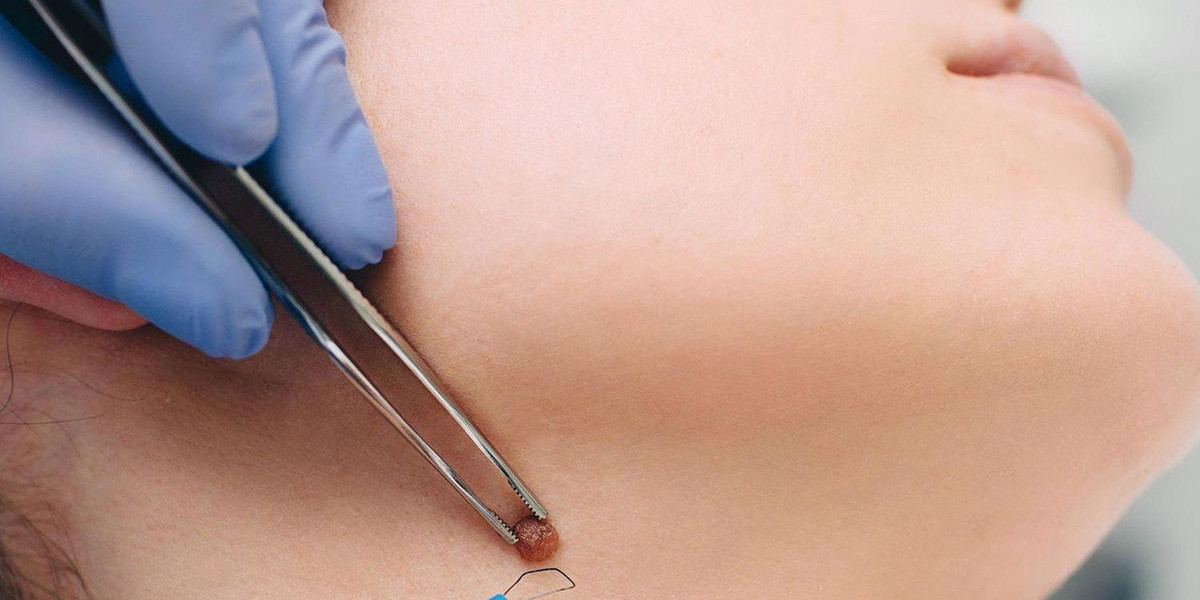

In the specialized field of dermatology, not all skin growths are created equal. While many people seek Mole removal in Dubai for small, superficial spots, others require medical intervention for larger or more complex lesions. These cases demand a higher level of clinical precision and a nuanced understanding of skin tension and depth. By utilizing advanced surgical and laser protocols, modern medical centers can address even the most prominent moles, ensuring that health and aesthetics are restored through a safe, authoritative, and medically responsible approach.
Defining Complex and Large Moles
A complex mole is generally defined by its size, depth, or location. These may include "giant congenital nevi" (moles present since birth) or "atypical nevi" that display irregular borders or multiple colors. When managing these cases, a professional clinical setting is mandatory. Unlike small spots that can be cleared with a quick laser pass, large lesions often span multiple layers of the dermis and may even involve underlying subcutaneous tissue.
In our clinical experience, the primary challenge with large Mole removal in Dubai is ensuring that the skin can close without tension. If a mole is located in a high-movement area, such as the shoulder or the middle of the back, the removal strategy must account for the mechanical stress the skin will undergo during the healing phase. This is why a comprehensive pre-procedural mapping session is essential to define the safest and most effective "exit path" for the lesion.
Mechanisms for Extensive Extraction
The mechanism of action for removing large lesions often involves a combination of techniques. For "bulky" or protruding moles, a specialized radiofrequency loop may be used to reduce the mass before a precision CO2 laser refines the surface. In cases where the mole is very deep, a "serial excision" may be considered. This involves removing the mole in stages over several months, allowing the skin to stretch naturally between sessions to minimize the final scar's length.
What patients typically report during recovery from a complex removal is a sense of relief from the physical weight or irritation of the growth. On a biological level, the body’s repair mechanism for a large site is more intensive. There is a greater recruitment of myofibroblasts—cells that help "contract" the area to close the gap. In a professional clinical environment, this process is carefully modulated with medical-grade dressings and tension-relief sutures to ensure the final surface is flat and aesthetically pleasing.
The Purpose of Managing Complex Cases
The purpose of addressing large moles is often a mix of medical necessity and significant self-confidence restoration. Large moles can be prone to "chronic trauma"—repeatedly getting caught on jewelry, clothing, or combs—which leads to inflammation and bleeding. Furthermore, large moles have a statistically higher requirement for professional monitoring. By removing them, the purpose is to eliminate a potential health risk and the physical discomfort associated with the growth.
Choosing a clinic for complex Mole removal in Dubai ensures that the procedure is performed with the highest medical authority. A clinic provides access to advanced pathology services, where removed tissue can be analyzed to ensure complete cell clearance. This authoritative approach provides the patient with the certainty that the lesion has been handled with the utmost medical integrity, prioritizing long-term skin health over quick, superficial fixes.
Core Benefits of Advanced Surgical Removal
When dealing with large or complex lesions, the benefits of advanced clinical intervention are critical for a successful outcome:
Total Clearance: Ensuring that every pigmented cell is removed to prevent the mole from returning.
Structural Integrity: Using internal "dissolvable" sutures to support the skin layers from within.
Aesthetic Refinement: Employing "fine-line" surgical techniques that hide scars within natural skin folds.
Comprehensive Safety: Performing the procedure in a sterile, high-tech surgical suite with localized numbing.
Identifying the Ideal Candidate for Complex Removal
The ideal candidate for this level of care is anyone with a large, protruding, or deep-seated mole that causes physical or emotional distress. It is particularly suitable for those who have been told elsewhere that their mole is "too large" or "too difficult" to remove. During your consultation, we assess your skin’s elasticity and your overall health to ensure that your body is prepared for a more extensive healing journey.
What patients typically report during recovery is how much "lighter" and more comfortable they feel once the lesion is gone. Candidates who are committed to a slightly longer healing timeline and who strictly follow all post-operative instructions achieve the best results. The goal is to trade a prominent, bothersome growth for a fine, well-healed mark that fades significantly over time.
Clinical Workflow for Large Lesion Removal
To manage the complexity of these procedures, we follow a rigorous, multi-step clinical protocol:
High-Level Mapping: Using digital imaging to determine the total volume and depth of the mole.
Surgical Planning: Designing an incision or laser path that respects the "Langer’s Lines" (natural tension lines) of the skin.
Local/Regional Anesthesia: Ensuring the area is completely desensitized for maximum patient comfort.
Strategic Extraction: Carefully removing the mole while preserving as much healthy tissue as possible.
Multi-Layer Closure: Using advanced suturing techniques to ensure a flat, secure, and fine result.
Target Zones for Complex and Large Moles
Large moles can appear anywhere, and their location significantly influences the surgical or laser strategy used.
| Body Zone | Specific Challenge | Clinical Solution |
| Scalp & Crown | High vascularity; hair preservation | Precision Shave Excision |
| Upper Back | High skin tension; prone to stretching | Multi-layer Suturing |
| Lower Face/Neck | High visibility; thin skin | Micro-Surgical Refinement |
| Limbs & Joints | Constant movement; friction | Flexible Healing Barriers |
Understanding Clinical Investment for Complex Cases
The resources required for large-scale Mole removal in Dubai are naturally more extensive than for minor spots. Factors such as the total surface area of the mole, the depth of the excision, and the need for specialized laboratory analysis all influence the treatment plan. Additionally, the time required in the surgical suite and the use of high-end suturing materials are carefully considered to ensure the best possible outcome. We provide a thorough personal assessment to outline the clinical steps and resources necessary for your specific journey.
Recovery Milestones for Extensive Procedures
Because more tissue is involved, the healing timeline for large removals is more structured.
Weeks 1–2: The focus is on wound protection and ensuring the sutures (if used) remain intact.
Month 1: The incision site is well-closed; it will appear pink as the blood supply supports the new tissue.
Months 2–4: The scar begins to soften and flatten as the collagen matures.
Year 1: The final result is achieved, with the mark fading to a pale, thin line that blends into the skin.
Safety Protocols and Potential Side Effects
In a controlled clinical setting, safety is the foundation of every step. While larger procedures carry a slightly higher need for aftercare, side effects like temporary bruising or localized swelling are standard and manageable. By strictly following clinical advice—such as avoiding heavy lifting or stretching the treated area—you minimize the risk of the wound opening or the scar widening. Professional follow-up appointments are scheduled to monitor every phase of your progress.
The Critical Role of Long-Term Sun Protection
Regardless of the size of the removal, UV protection remains the most vital part of aftercare. For large removal sites, the new skin is particularly vulnerable to the sun for up to a year. Consistently applying a broad-spectrum SPF 50 and keeping the area covered when outdoors ensures that the scar does not darken or become "hypertropic." This commitment to skin protection is the final step in achieving a flawless, healthy result.
Reclaiming Your Skin Health with Authority
Addressing a large or complex mole is a significant decision that can change your daily life for the better. It is a process that requires the highest level of medical authority and clinical skill. At Tajmeels Clinic, we specialize in providing a supportive, professional environment for those with complex skin needs. We believe that no lesion is too challenging when addressed with the right technology and expert care. Our goal is to provide you with a safe, effective path to clear skin, helping you achieve the comfort and confidence you deserve through world-class medical procedures.