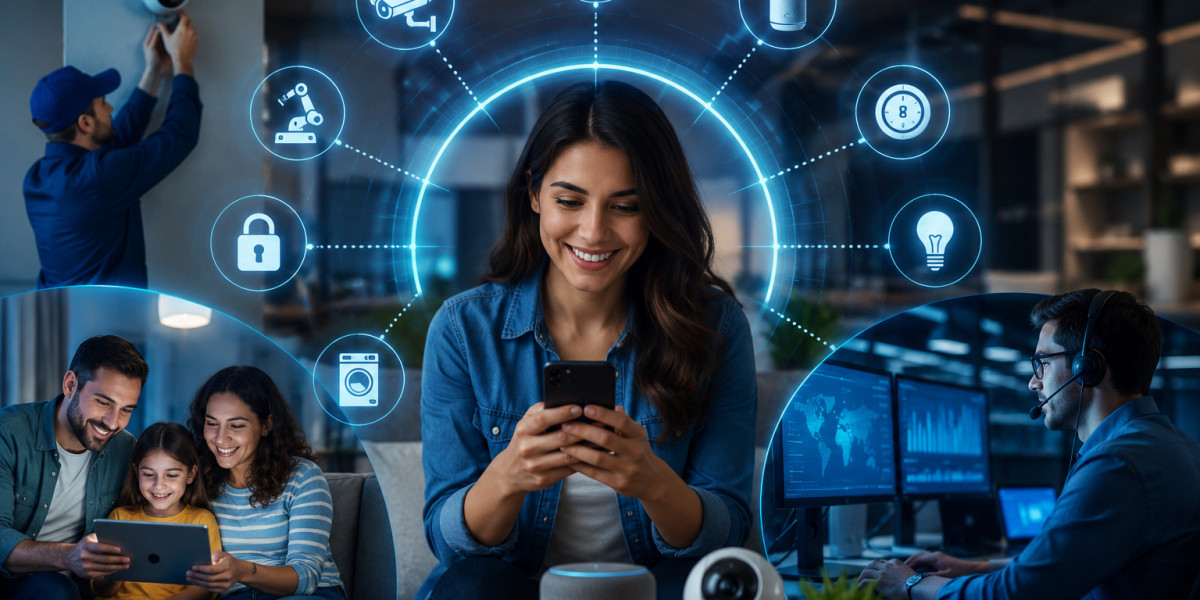

Customer experience (CX) has become the biggest competitive differentiator for modern businesses. Price and product quality still matter—but customers now expect reliability, personalization, speed, and transparency.
This is where IoT monitoring is transforming how companies interact with customers in real time.
In this blog, we’ll explore how IoT monitoring directly improves customer experience and why it’s becoming essential across industries.
What Is IoT Monitoring (Quick Recap)
IoT monitoring refers to continuously tracking the health, performance, and behavior of connected devices using sensors, networks, and analytics platforms.
It enables businesses to:
- Collect real-time data from devices
- Detect problems early
- Automate responses
- Improve services based on usage insights
In short: IoT monitoring turns products into intelligent, responsive services.
Why Customer Experience Needs IoT Monitoring
Customers today expect:
- Zero downtime
- Instant support
- Personalized services
- Transparency and trust
Without real-time visibility into devices and operations, companies can only react after customers complain.
IoT monitoring flips this model from reactive → proactive → predictive.
1. Proactive Issue Detection (Fix Problems Before Customers Notice)
Nothing frustrates customers more than service interruptions.
IoT monitoring continuously tracks device health and can detect:
- Performance drops
- Hardware failures
- Network issues
- Environmental anomalies
Example
A smart home security camera detects battery degradation weeks before failure.
The system automatically:
- Alerts the user
- Schedules maintenance
- Ships replacement parts
Customer experience impact:
- No downtime
- No surprise failures
- No support tickets needed
Result: Customers feel taken care of before problems even occur.
2. Reduced Downtime = Happier Customers
Downtime directly damages trust.
Industries where downtime hurts CX the most:
- Internet service providers
- Smart home products
- Healthcare devices
- Logistics and delivery services
- Smart vehicles
With IoT monitoring:
- Systems detect outages instantly
- Engineers get real-time alerts
- Automated failover can activate backup systems
Instead of customers reporting problems, companies can notify customers first.
That shift dramatically improves brand perception.
3. Faster Customer Support & Resolution
Traditional support relies on customers describing the problem.
But customers often don’t know:
- What failed
- Why it failed
- When it started
IoT monitoring gives support teams:
- Device logs
- Performance history
- Real-time diagnostics
- Error alerts
Before IoT Monitoring
Customer: “My device isn’t working.”
Support: “Can you restart it?” ?
After IoT Monitoring
Support:
“We noticed your device lost connectivity at 3:42 PM due to a firmware issue. We’ve already fixed it.”
Customer experience becomes:
- Faster
- More professional
- Less frustrating
4. Personalized Customer Experiences
IoT monitoring collects usage behavior data, such as:
- How often customers use features
- When they use products
- Which features they ignore
- Environmental patterns
This enables hyper-personalization.
Examples
Smart Thermostat
- Learns preferred temperature patterns
- Automatically adjusts schedules
- Reduces energy bills
Wearable Devices
- Deliver personalized health insights
- Provide tailored notifications
- Suggest improvements
Customers feel the product is:
- Intelligent
- Helpful
- Tailored to them
Personalization builds loyalty.
5. Transparent Communication Builds Trust
Customers hate uncertainty more than bad news.
IoT monitoring enables real-time status updates:
- Service health dashboards
- Shipment tracking
- Device performance reports
- Usage insights
Example
Logistics companies provide:
- Live package tracking
- Temperature monitoring for food/medicine
- Delivery ETA updates
Customers feel:
- In control
- Informed
- Confident in the service
Transparency = Trust.
6. Predictive Maintenance Prevents Customer Frustration
Predictive maintenance is one of the biggest CX benefits of IoT monitoring.
Instead of:
- Waiting for failure
- Scheduling emergency repairs
Companies can predict failures using:
- Sensor data
- Machine learning models
- Usage trends
Real-world impact
- Elevators serviced before breakdown
- Cars serviced before part failure
- Internet routers replaced before disconnects
Customers experience:
- Reliability
- Convenience
- Peace of mind
7. Seamless Product Updates & Improvements
IoT monitoring provides real-world feedback:
- Bugs in production
- Performance bottlenecks
- Feature usage trends
This allows companies to:
- Push firmware updates remotely
- Improve features based on real usage
- Remove friction points quickly
Customers benefit from:
- Continuous product improvement
- Better performance over time
- Longer product lifespan
Your product becomes a living service, not a static purchase.
8. Building Long-Term Customer Relationships
IoT monitoring shifts the relationship from:
One-time sale → Continuous service
This enables:
- Subscription models
- Ongoing support
- Continuous engagement
- Upsell opportunities
When customers feel supported and valued, they stay longer and spend more.
Business Impact of Better Customer Experience
Improved CX leads to:
- Higher customer retention
- Reduced churn
- Better reviews & referrals
- Increased lifetime value
- Lower support costs
IoT monitoring is no longer just a technical feature—it’s a customer experience strategy.
Final Thoughts
IoT monitoring is transforming how companies deliver value to customers.
It enables businesses to be:
- Proactive instead of reactive
- Personalized instead of generic
- Transparent instead of opaque
- Reliable instead of unpredictable
In a world where experience defines brand loyalty, IoT monitoring is becoming a competitive necessity.